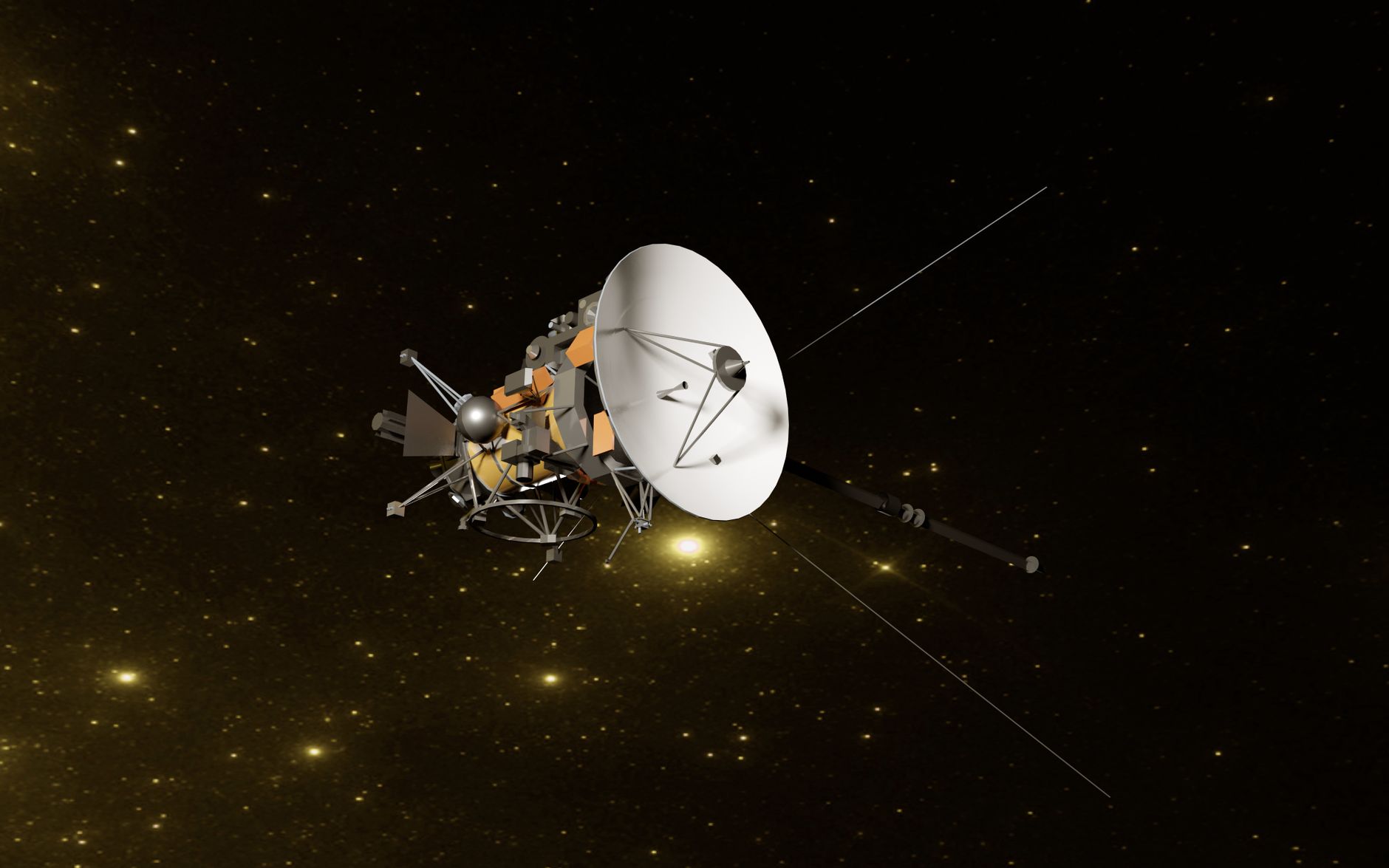
India's rich heritage in astronomy and mathematics is finding fresh expression in Bhopal, where a newly opened space exploration gallery is drawing connections between ancient wisdom and cutting-edge space technology. The innovative exhibition space represents a growing trend in Indian science communication that honors historical contributions while showcasing modern achievements.
Ancient Foundations of Indian Astronomy
India has a documented tradition of astronomical observation and calculation spanning over two millennia. Ancient texts like the Surya Siddhanta and the works of mathematicians such as Aryabhata and Brahmagupta laid groundwork for understanding planetary motion, eclipses, and the cosmos. Aryabhata, working in the 5th century CE, calculated the Earth's circumference with remarkable accuracy and proposed that the Earth rotates on its axis, concepts that were revolutionary for their time.
The gallery reportedly highlights these historical contributions, demonstrating that space exploration does not exist in a cultural vacuum but builds upon centuries of human curiosity about the heavens. By positioning ancient Indian astronomical concepts alongside modern space technology, the exhibition creates a narrative of continuity rather than disconnection.
Bridging Past and Present
The integration of historical and contemporary content serves multiple purposes. For younger visitors, it provides cultural context and national pride, showing that scientific inquiry has deep roots in Indian civilization. It also demonstrates the universal nature of scientific questions, as ancient scholars grappled with many of the same fundamental questions about the universe that drive space exploration today.
Modern visitors can see how concepts like zero, developed in India and crucial for mathematical calculations, enabled the complex computations necessary for satellite launches and orbital mechanics. The decimal system, another Indian innovation, underpins all digital technology used in contemporary spacecraft and mission control systems.
Contemporary Space Achievements
India has established itself as a significant player in space technology through the Indian Space Research Organisation. Missions like Chandrayaan, which explored the Moon, and Mangalyaan, which successfully reached Mars orbit on its first attempt, demonstrate technical sophistication and cost-effective engineering. The gallery likely showcases these achievements as the modern continuation of India's astronomical legacy.
The recent developments in India's space program, including plans for human spaceflight through the Gaganyaan program and interplanetary missions, provide compelling content for such an exhibition. Interactive displays and models can help visitors understand complex concepts like gravitational assists, orbital insertion, and remote sensing.
Educational Impact
Science galleries and museums play a crucial role in building scientific temperament and inspiring future generations of scientists and engineers. By locating this gallery in Bhopal, a city in central India, the organizers expand access beyond major metropolitan centers like Mumbai, Delhi, or Bangalore. This democratization of science education is vital for tapping talent from across the country's diverse regions.
The blending of ancient and modern content also addresses a common challenge in science communication: making technical subjects relatable and culturally relevant. When visitors see their heritage reflected in scientific narratives, engagement increases and the material becomes more meaningful.
Technology Integration in Galleries
Modern exhibition spaces increasingly use interactive technology, virtual reality, and multimedia presentations to create immersive experiences. Such tools can bring abstract concepts to life, allowing visitors to virtually pilot spacecraft, observe planetary systems, or manipulate orbital trajectories. The Bhopal gallery likely incorporates such technologies to enhance the learning experience.
Augmented reality applications can overlay ancient astronomical instruments with their modern equivalents, helping visitors visualize the evolution of technology. Digital timelines can place Indian astronomical achievements within the broader context of global scientific development.
Looking Forward
The opening of specialized science galleries in tier-two cities signals a positive trend in India's science education infrastructure. As space technology becomes increasingly important for communication, weather forecasting, agriculture, and national security, public understanding of these systems becomes more critical.
The gallery model that connects heritage with innovation could be replicated for other scientific fields, creating a network of regional science centers that celebrate both historical achievement and contemporary advancement. This approach makes science feel less like a foreign import and more like a natural extension of India's intellectual traditions.
By presenting space exploration as both a continuation of ancient curiosity and a driver of future development, the Bhopal gallery helps visitors understand their place in an ongoing story of human discovery.