The announcement of plans for an India Heritage Museum in Washington DC marks a significant step in cultural diplomacy and global recognition of India's contributions to human civilisation. This initiative seeks to create a dedicated space in America's capital where visitors can explore the depth and breadth of Indian heritage, from ancient scientific achievements to artistic traditions spanning millennia.
Why Washington DC Matters for Cultural Representation
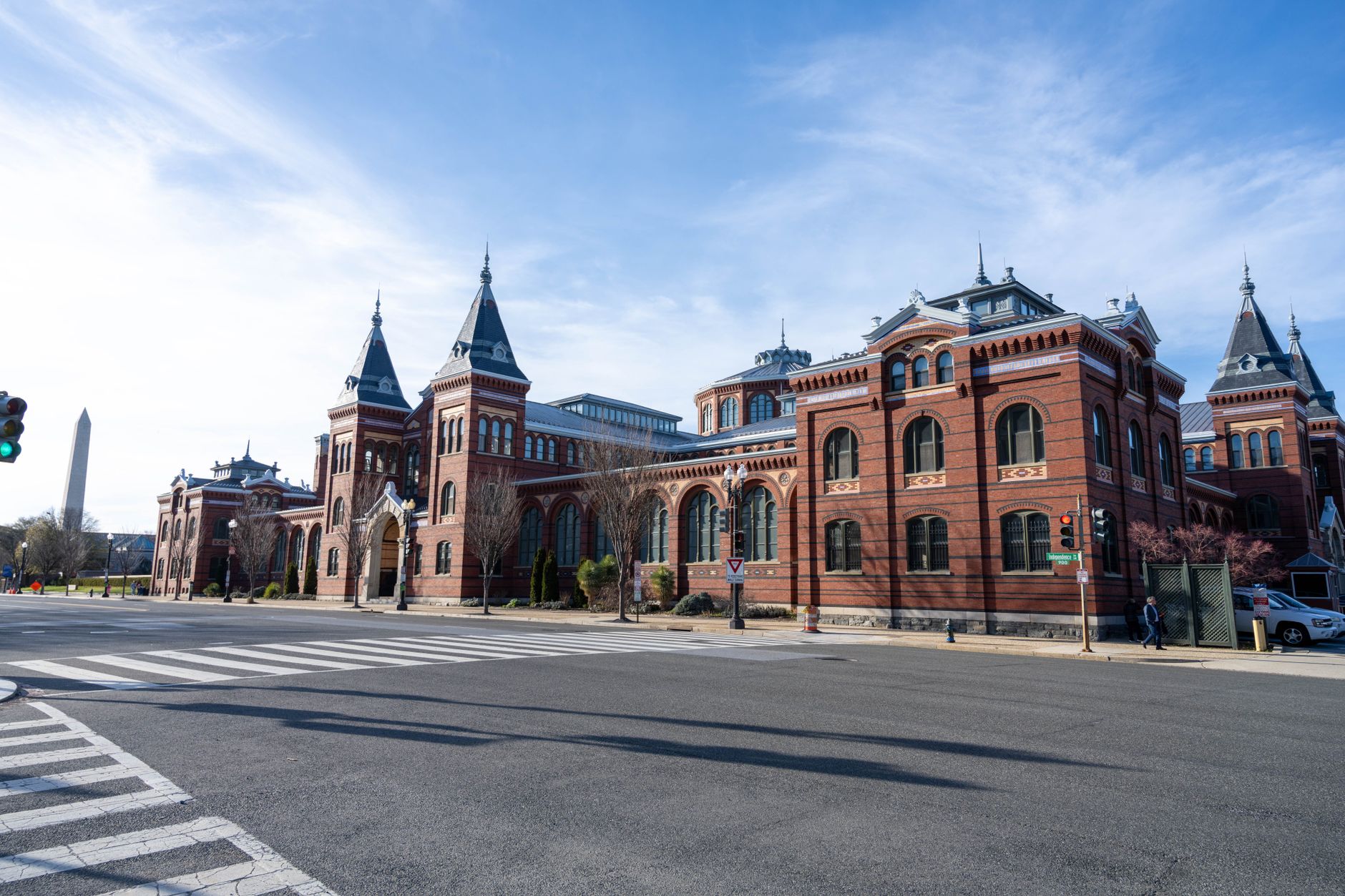
Washington DC hosts numerous museums and cultural institutions that represent various nations and communities, including the Smithsonian Institution's extensive collection. The presence of a dedicated India Heritage Museum would place Indian civilisation alongside other major cultural exhibitions in one of the world's most visited museum corridors. The location is particularly strategic given the city's role as a diplomatic hub and educational centre attracting millions of domestic and international visitors annually.
Museums in Washington DC serve not just as tourist attractions but as educational resources for American students, researchers, and policymakers. An India Heritage Museum would provide context for understanding India's contemporary role as a technology leader and emerging global power by showcasing the historical foundations of innovation and knowledge systems that originated on the subcontinent.
Ancient Indian Contributions to Technology and Science
One of the museum's likely focal points would be India's remarkable technological and scientific heritage. Ancient India made groundbreaking contributions that shaped modern mathematics, astronomy, medicine, and engineering. The concept of zero, the decimal system, and advanced algebraic concepts all emerged from Indian mathematicians like Aryabhata and Brahmagupta between the 5th and 7th centuries CE.
Indian astronomers calculated planetary positions, eclipses, and the Earth's circumference with remarkable accuracy centuries before European scientists reached similar conclusions. The Jantar Mantar observatories built in the 18th century represent the culmination of this astronomical tradition, featuring massive instruments constructed with precise geometric principles.
Metallurgy and Engineering Marvels
The museum could showcase India's advanced metallurgical knowledge, exemplified by the Iron Pillar of Delhi, a 1,600-year-old structure that has resisted rust due to sophisticated iron-working techniques. Ancient Indian shipbuilding was equally advanced, with maritime trade networks extending from East Africa to Southeast Asia, supported by knowledge of monsoon wind patterns and navigation techniques.
Water management systems like stepwells and the sophisticated urban planning of the Indus Valley Civilisation, with its standardised bricks, drainage systems, and grid-pattern streets dating to 2500 BCE, demonstrate engineering sophistication that rivals any ancient civilisation.
Medical Knowledge and Ayurveda
Ancient Indian medical systems, particularly Ayurveda and the surgical techniques documented by Sushruta around 600 BCE, represent another technological achievement. Sushruta's Samhita describes over 300 surgical procedures and 120 surgical instruments, including plastic surgery techniques for rhinoplasty that were not known in Europe until centuries later.
Textile Technology and Craftsmanship
India's textile traditions revolutionised global trade, with muslin fabrics so fine they were called "woven air" and dyeing techniques that produced colourfast fabrics prized across continents. The sophisticated weaving technologies, resist-dyeing methods like bandhani and ikat, and the cultivation and processing of cotton represented technological achievements that made Indian textiles the most sought-after trade goods for millennia.
Digital Presentations and Modern Museum Technology
A contemporary heritage museum would likely employ advanced digital technologies to bring ancient knowledge systems to life. Interactive displays could demonstrate mathematical concepts, virtual reality experiences might recreate ancient cities, and multimedia presentations could connect historical innovations to modern Indian achievements in information technology, space exploration, and pharmaceuticals.
Strengthening People-to-People Connections
Beyond showcasing artefacts and achievements, the museum would serve as a cultural bridge, fostering understanding between American and Indian communities. With a significant Indian diaspora in the United States and growing economic and strategic partnerships between the two nations, such an institution would provide context for contemporary relationships while celebrating shared values of innovation and knowledge-seeking.
The museum could host educational programmes, cultural performances, visiting exhibitions, and scholarly conferences, creating an active space for ongoing dialogue rather than simply a static collection.
The Broader Impact
Cultural institutions like the proposed India Heritage Museum play a crucial role in shaping international perceptions and fostering mutual respect. By presenting India's civilisational legacy in a prominent international venue, the museum would contribute to a more nuanced understanding of India's past and present, moving beyond stereotypes to reveal the complexity and sophistication of one of humanity's oldest continuous civilisations.